Starting in version 100 NodeXL has added a data import feature for extracting social networks from the associations between users and videos in YouTube. The new social media network data spigot offers insights into the ways YouTube is socially structured.…
On December 15th in Mountain View, California join me for lunch and a workshop on creating social media network diagrams! We will provide a hands-on guide to creating maps of the collections of connections among people who tweet about various brands,…
On December 4th, I will be attending the Oxford Internet Institute's Forum on Relationships and the Internet which will feature researchers focused on computer-mediated relationships. Rather than being used primarily to access information, people often use networked computing to access…
This is a brief demo video about NodeXL analyzing Twitter social network connections among a group of users who all mentioned the term "digg". 2009 - November - NodeXL - Demo - Mapping Twitter Social Networks "Digg" from Marc Smith…
Next week I will be attending and discussing mobile social media and social networks at the Mobile Web Africa conference in Johannesburg, South Africa. It is my first time to Africa and I am excited to both visit and to discuss…
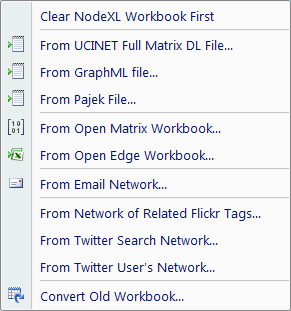
Version 95 of NodeXL is hot off the compiler and we are pleased to announce several major features that create a social media network analysis dashboard. From the NodeXL interface it is now possible to import networks from twitter, flickr, email, and a range of social network file formats. Coming soon: support for more spigots – the connectors that pull data from leading social media sources.
What social media data most interest you? We are considering integration with web and wiki crawlers, and support for YouTube, delicious, and enterprise data sources like Active Directory (LDAP), SharePoint, and Exchange.
This release also improves support for images, particularly those pulled from URLS, like twitter or facebook profile photos!
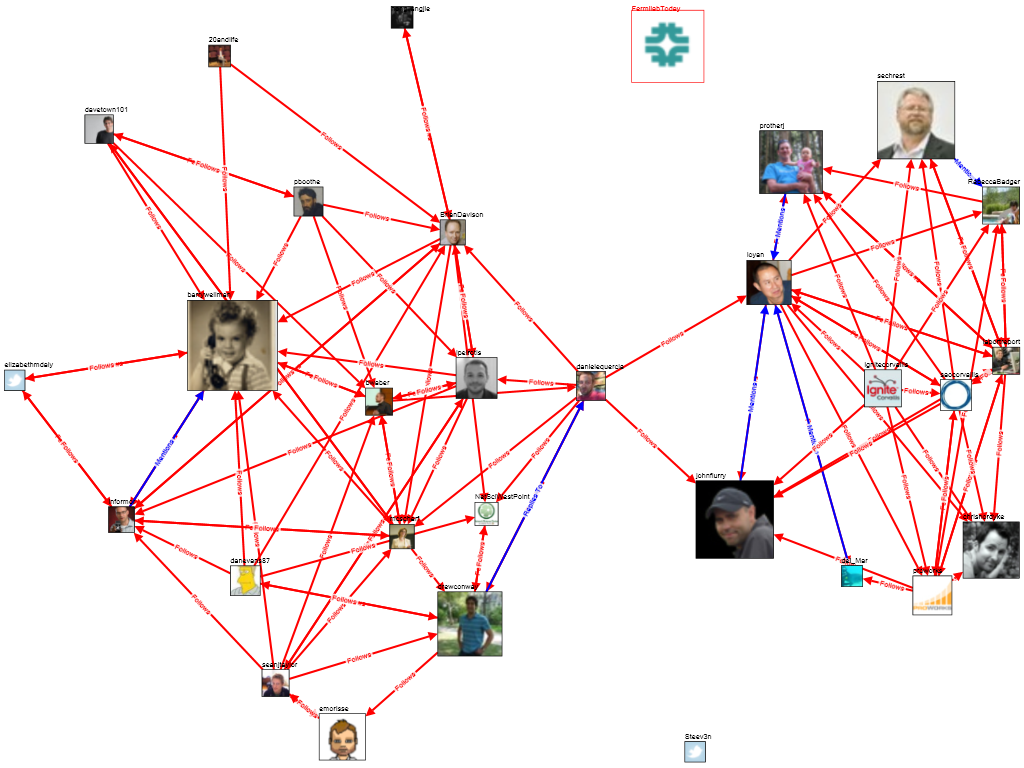
Here, for example, is a map of the connections among twitter accounts that tweeted the “WIN09” tag that was used in the recent Social Networks Summit at NYU (http://winworkshop.net/) The map illustrates the way the summit brought together previously separate clusters of people from the various disciplines that have been attracted to the study of networks in general and social networks in particular. Size of the image equals the number of tweets that person created.
A refined version adds Edge Labels and color to highlight the different tie types in the graph: “follows” relationships and “replies to” and “mentions” and now scaled by “Followers”.
In both views, the high betweenness role of one twitter account is clear.